Last Updated on: July 25, 2026 | Written By: Consumer Health Insight Team | Reviewed By: Shalini Singh
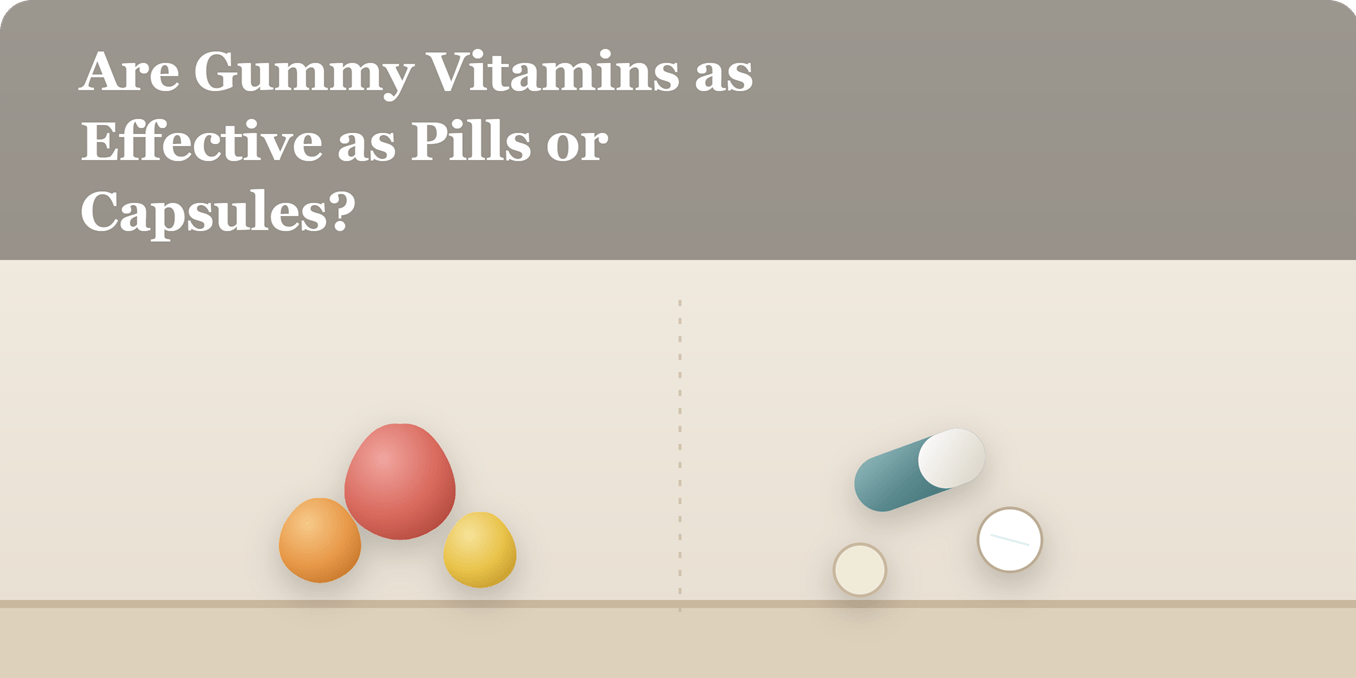
Gummy vitamins have become incredibly popular, and it’s easy to see why. They taste good, they’re easy to chew, and they don’t come with the same “medicine” feeling that swallowing a pill can bring. But popularity doesn’t always mean equal effectiveness. So how do gummies actually compare to traditional pills and capsules?
How Gummies Are Made Differently
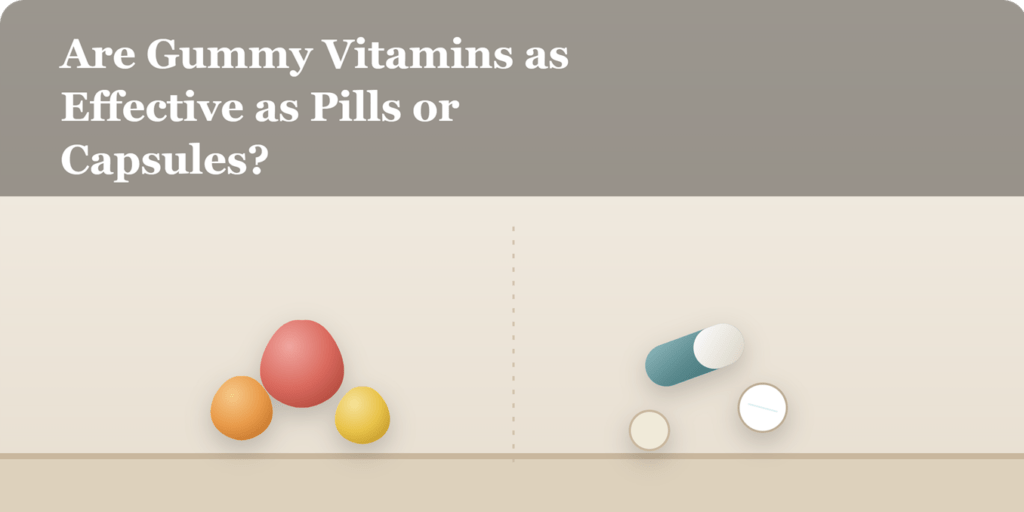
Gummy vitamins are made using a gel base, usually pectin or gelatin, combined with sugar, flavoring, and the active vitamin or mineral. This manufacturing process is different from pills and capsules, and it comes with some limitations that are worth understanding.
The Dosage Problem
One of the biggest issues with gummy vitamins is dosage. Certain nutrients, especially minerals like calcium, magnesium, and iron, take up a lot of physical space. Fitting an effective dose into a small, chewable gummy is difficult, so many gummy vitamins simply contain lower amounts of these minerals compared to pill form. This means you might need to eat several gummies to get the same dose you’d get from one capsule, and that adds a lot of sugar over time.
Vitamin D, B vitamins, and vitamin C tend to work better in gummy form because they don’t require large doses to be effective, so gummies for these nutrients are often comparable to pills.
Stability and Shelf Life
Some vitamins are sensitive to heat, moisture, and light, and gummies, because of their soft, moist texture, aren’t always the best environment for keeping certain nutrients stable over time. Studies have found that some gummy vitamins lose potency faster than tablets or capsules, meaning the amount of the active ingredient can decrease before the expiration date, especially if stored in a warm or humid place.
Sugar and Additives
Most gummy vitamins contain some amount of sugar to make them palatable, and while a small amount isn’t a major health concern, it can add up if you’re taking multiple gummies daily or giving them to children who might see them as candy rather than medicine. This can also create a habit of associating vitamins with a sweet treat, which isn’t ideal, especially for kids.
Absorption: Is It Actually Different?
Some people believe that because gummies are chewed rather than swallowed whole, they absorb faster or better. There isn’t strong evidence that chewing significantly changes absorption for most vitamins, since digestion breaks down pills and capsules effectively once they reach the stomach anyway. The bigger factor affecting absorption is usually the specific form of the nutrient itself, not whether it’s a gummy or a pill.
Where Gummies Fall Short
Gummies generally aren’t the best option for high-dose mineral supplementation, like calcium or magnesium, simply because of the space and stability limitations mentioned earlier. They’re also not ideal if you’re trying to avoid added sugars or artificial coloring, since many gummy formulas rely on these to stay palatable and visually appealing.
Where Gummies Actually Work Well
For nutrients that don’t require large doses, like vitamin D, B12, biotin, or vitamin C, gummies can be just as effective as pills, as long as the product is reasonably well-made and stored properly. They’re also genuinely useful for people who struggle to swallow pills, including children, older adults, or anyone with a sensitive gag reflex. In these cases, a gummy that actually gets taken consistently is more valuable than a pill that ends up skipped because it’s uncomfortable to swallow.
What to Look for If You Choose Gummies
If you prefer gummies, check the label carefully for the actual dose of each nutrient, and compare it to what you’d get from a standard pill or capsule. Look for options with lower added sugar, and store them in a cool, dry place to help preserve potency. Third-party testing certifications are just as important for gummies as they are for any other supplement, so don’t skip that check simply because the product feels less “medical.”
The Bottom Line
Gummy vitamins aren’t inherently worse than pills, but they do come with real limitations, particularly for minerals that require larger doses and for potency stability over time. For smaller-dose vitamins, gummies can be a perfectly reasonable choice, especially if they help you stay consistent. The best supplement, in any form, is ultimately the one you actually take regularly and that meets your specific nutritional needs.