Last Updated on: July 25, 2026 | Written By: Consumer Health Insight Team | Reviewed By: Shalini Singh
Supplement labels are full of terms that sound official but aren’t always explained clearly. Words like “elemental,” “proprietary blend,” or “bioavailable” get thrown around a lot, and it’s easy to feel confused about what you’re actually paying for. Here’s a plain-language breakdown of the most common terms you’ll see.
Supplement Facts Panel
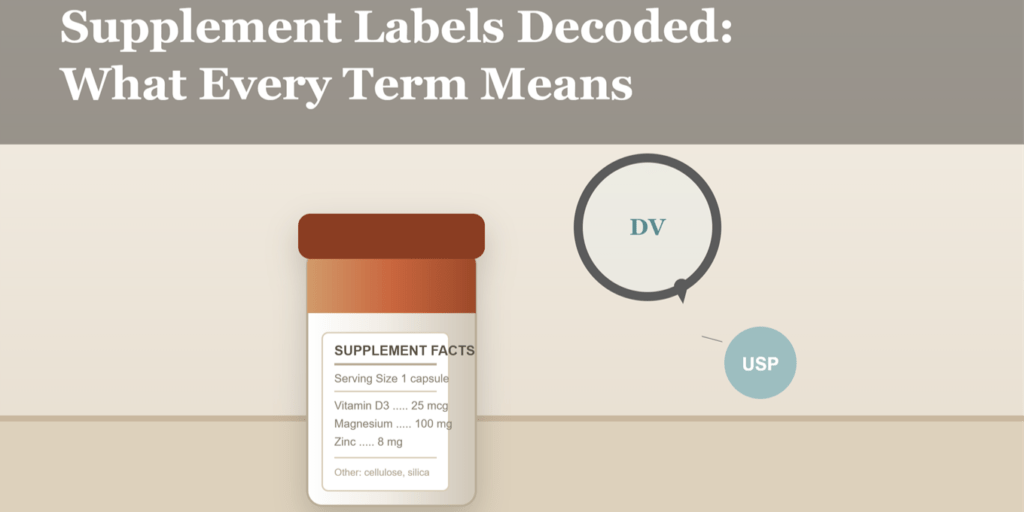
This is the section, usually on the back or side of the bottle, that lists exactly what’s in the product. It’s similar to the nutrition facts panel on food, and it’s the most reliable part of the label because it’s legally required to reflect what’s actually inside. This is where you should focus your attention rather than the marketing claims on the front.
Serving Size
This tells you how much of the product counts as one serving, whether that’s one capsule, two tablets, or a full scoop of powder. Pay attention here because sometimes the advertised dose on the front of the bottle refers to two or three servings, not one, which can make a product look stronger than it actually is per pill.
Elemental vs. Compound Weight
This one trips up a lot of people, especially with minerals like magnesium, calcium, or iron. Minerals are often bound to another compound, like magnesium bound to citrate or glycinate. “Elemental” refers to the actual amount of the pure mineral itself, while the compound weight includes the mineral plus whatever it’s bound to. A supplement might say “1000 mg magnesium citrate” but only contain around 150 mg of actual elemental magnesium. Always check for the elemental amount if you’re trying to hit a specific dose.
Bioavailability
This refers to how well your body can actually absorb and use a nutrient. Some forms of a vitamin or mineral are absorbed more efficiently than others. For example, magnesium glycinate is generally considered more bioavailable than magnesium oxide. Higher bioavailability doesn’t always mean a supplement is better for everyone, but it does mean your body is likely getting more out of each dose.
Proprietary Blend
This term means a company has combined multiple ingredients into one blend but isn’t required to disclose the exact amount of each individual ingredient, only the total weight of the blend. This makes it hard to know if you’re getting a meaningful dose of any single ingredient. It’s not necessarily a sign of a bad product, but it does reduce transparency.
Third-Party Tested
This means an independent organization, not the manufacturer, has verified that the product contains what the label claims and is free of certain contaminants. Look for certification marks from groups like NSF, USP, or Informed Sport, since these confirm the testing was done by a credible outside source.
Standardized Extract
This term is common in herbal supplements. It means the extract has been processed to contain a consistent, measurable amount of the plant’s active compound. For example, a standardized turmeric extract might guarantee a certain percentage of curcumin, the compound believed to be responsible for most of turmeric’s effects. Without standardization, herbal potency can vary a lot from batch to batch.
Other Ingredients
This section lists everything in the product besides the active ingredients, including fillers, binders, capsule material, and sometimes flavoring or coloring agents. Most of these are harmless, but if you’re avoiding certain additives, allergens, or artificial colors, this is the section to check.
GMP Certified
GMP stands for Good Manufacturing Practices. This certification means the facility that made the product follows specific quality control standards during manufacturing. It’s more about the manufacturing process than the ingredients themselves, but it’s still a useful signal of a company that takes quality seriously.
Non-GMO, Organic, and Allergen-Free Claims
These labels refer to how the ingredients were grown or processed, not necessarily how effective the supplement is. Non-GMO means the ingredients weren’t genetically modified, organic means they were grown following organic farming standards, and allergen-free claims indicate the product avoids common allergens like soy, gluten, or dairy. These are worth checking if you have specific dietary needs, but they don’t tell you much about the supplement’s actual potency or effectiveness.
Why Understanding These Terms Matters
Once you know what these terms actually mean, supplement shopping becomes a lot less confusing. You’ll be able to spot the difference between a product that’s transparent about its ingredients and one that’s relying on vague marketing language to seem more impressive than it is. A little label literacy goes a long way toward making smarter, more informed choices.